These are EU AI Compass educational articles, not official EU guidance, legal advice, or a compliance guarantee. Start with current law, then use the article groups to classify systems, build records, check Article 50 notices, and track changes.
Regulatory update
The 7 May 2026 Digital Omnibus provisional agreement would move many high-risk AI duties to later dates if it is formally adopted and published. Until final text confirms the change, keep the current-law baseline, inventory work, role checks, vendor evidence, Article 50 review, and evidence records moving.
Digital Omnibus cluster
Start with the router, then open the guide that matches the planning track: standards readiness, product-integrated AI, or SME and small-mid-cap relief.
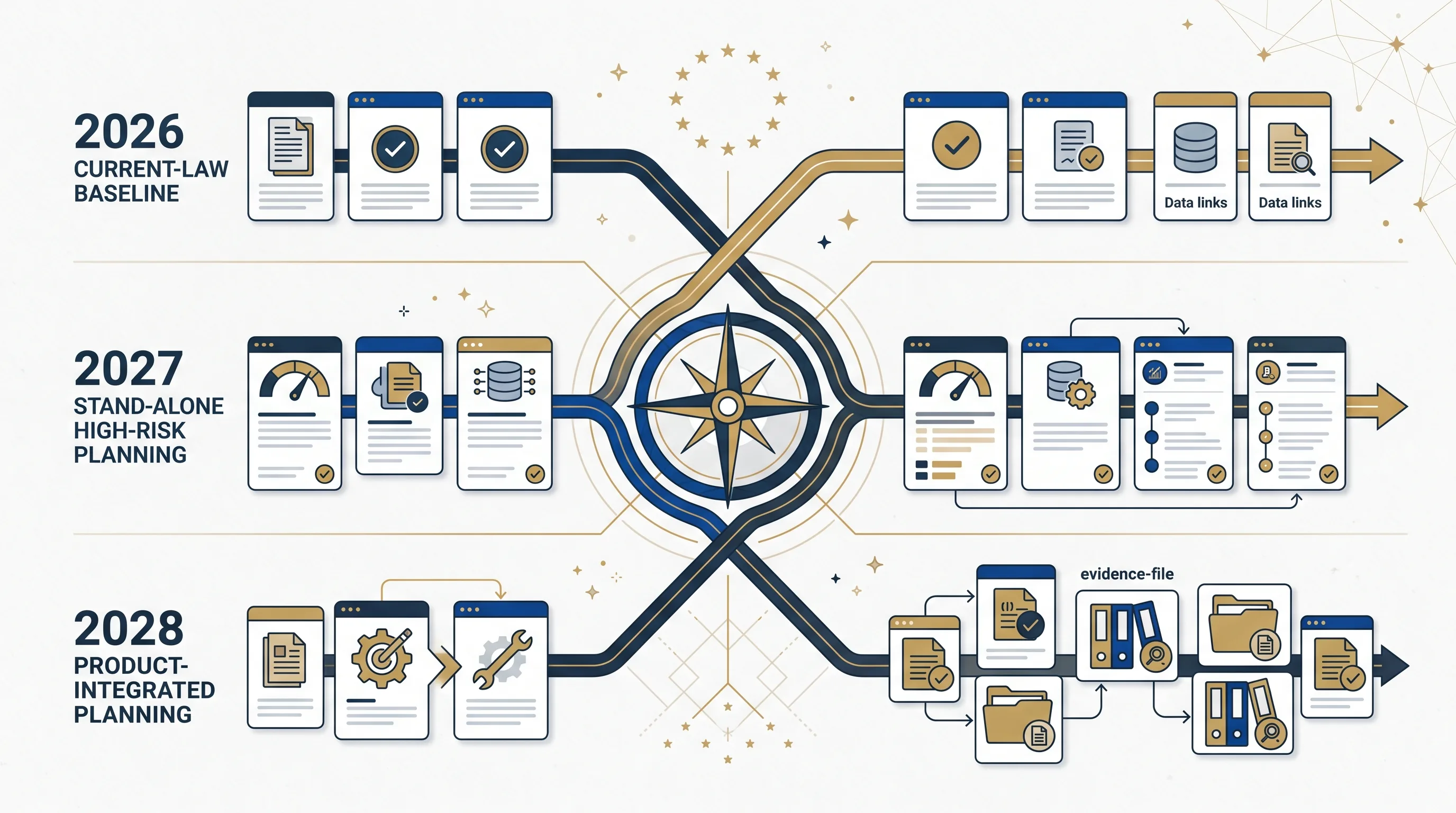
Separate current-law dates from 2026, 2027, and 2028 planning tracks for one AI system.
GUIDE · 5 MINBuild evidence structures that can absorb harmonised standards and common specifications when they arrive.
GUIDE · 5 MINConnect AI Act planning with the product safety file, supplier evidence, and sectoral-law overlap.
GUIDE · 5 MINTreat SME and small-mid-cap relief as a planning issue, not an exemption from records.
Digital Omnibus 2026 guides
Review image, avatar, video, editing, and vendor workflows for non-consensual intimate-content risk.
Evidence planningKeep inventory, vendor checks, Article 50 review, oversight records, AI literacy, and decision logs moving.
Google AI governance
Use this article when Google AI news has created a practical question: who owns the AI feature, what data does it touch, and what evidence should the organisation keep before the feature spreads across daily work?
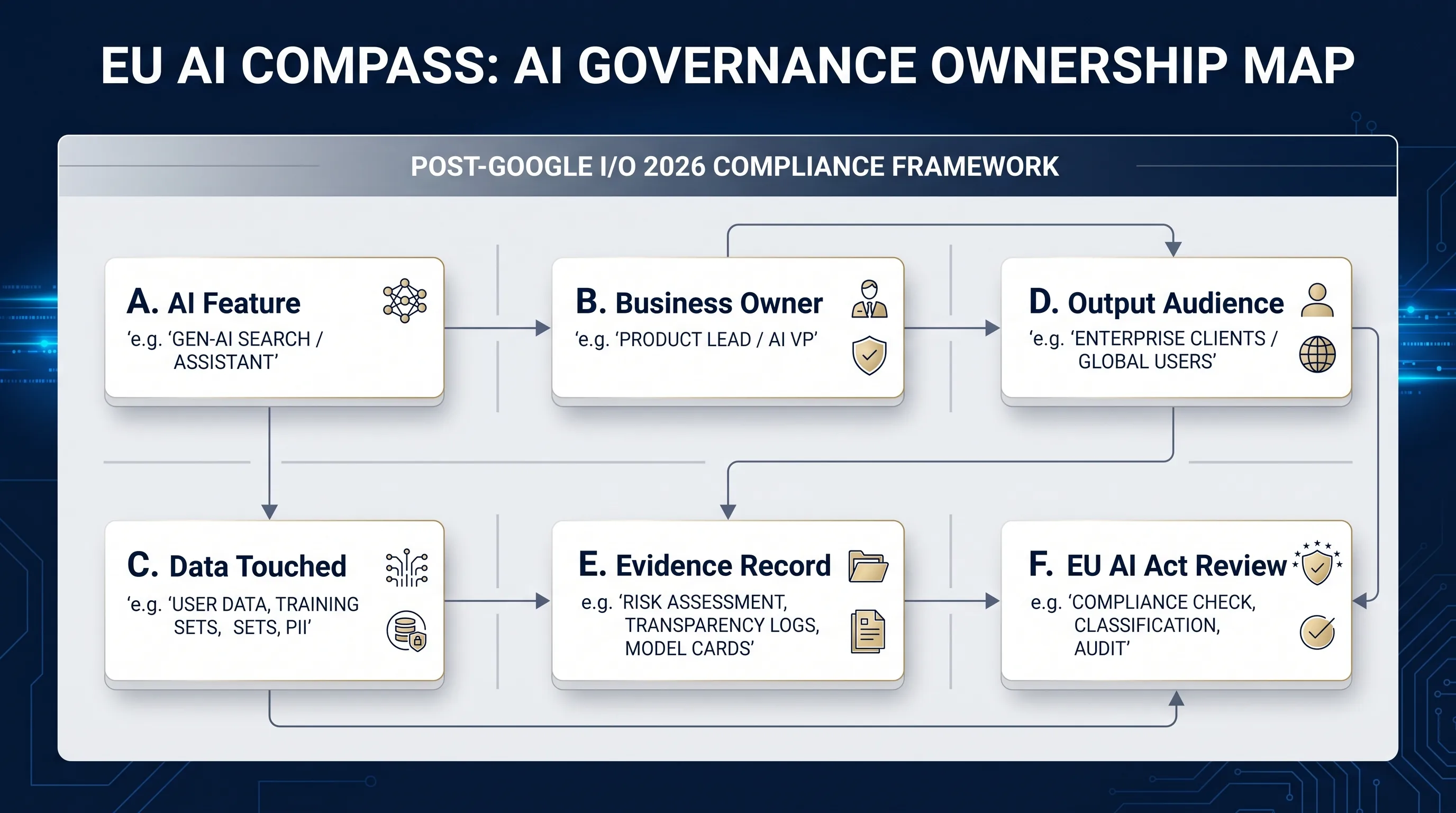
This is not a launch recap. It routes Google AI users to the practical records that matter first: inventory, owner, data, output audience, disclosure review, literacy evidence, vendor file, and deployer evidence route.

Or choose by topic
Article 5, Article 4, adopted dates, and the baseline to plan against.
Annex III, provider/deployer role, scope questions, and framework links.
Inventory, vendor records, oversight logs, Article 50 notices, and incident paths.
Digital Omnibus updates, national enforcement, weekly notes, and incident signals.
Current-law baseline
Before debating possible changes, clear the basics: prohibited practices, AI literacy, adopted dates, and the current-law readiness baseline.

Start here for AI uses that may need to stop or be redesigned before a readiness plan. The article explains each prohibition with practical examples.

Use this when your team needs training records and a role-based literacy plan for people who use or oversee AI.

Keep adopted dates separate from proposals. Read this before changing deadlines, policy wording, or board updates.

Use this after the timeline article when you need a practical plan for inventory, classification, evidence owners, and review.
Classification and governance
Weak classification creates weak evidence. These articles help you separate Annex III risk, governance controls, and sandbox decisions.

Read this before assuming a system is low-risk, high-risk, or outside scope. Focus on use case, impact, and evidence.

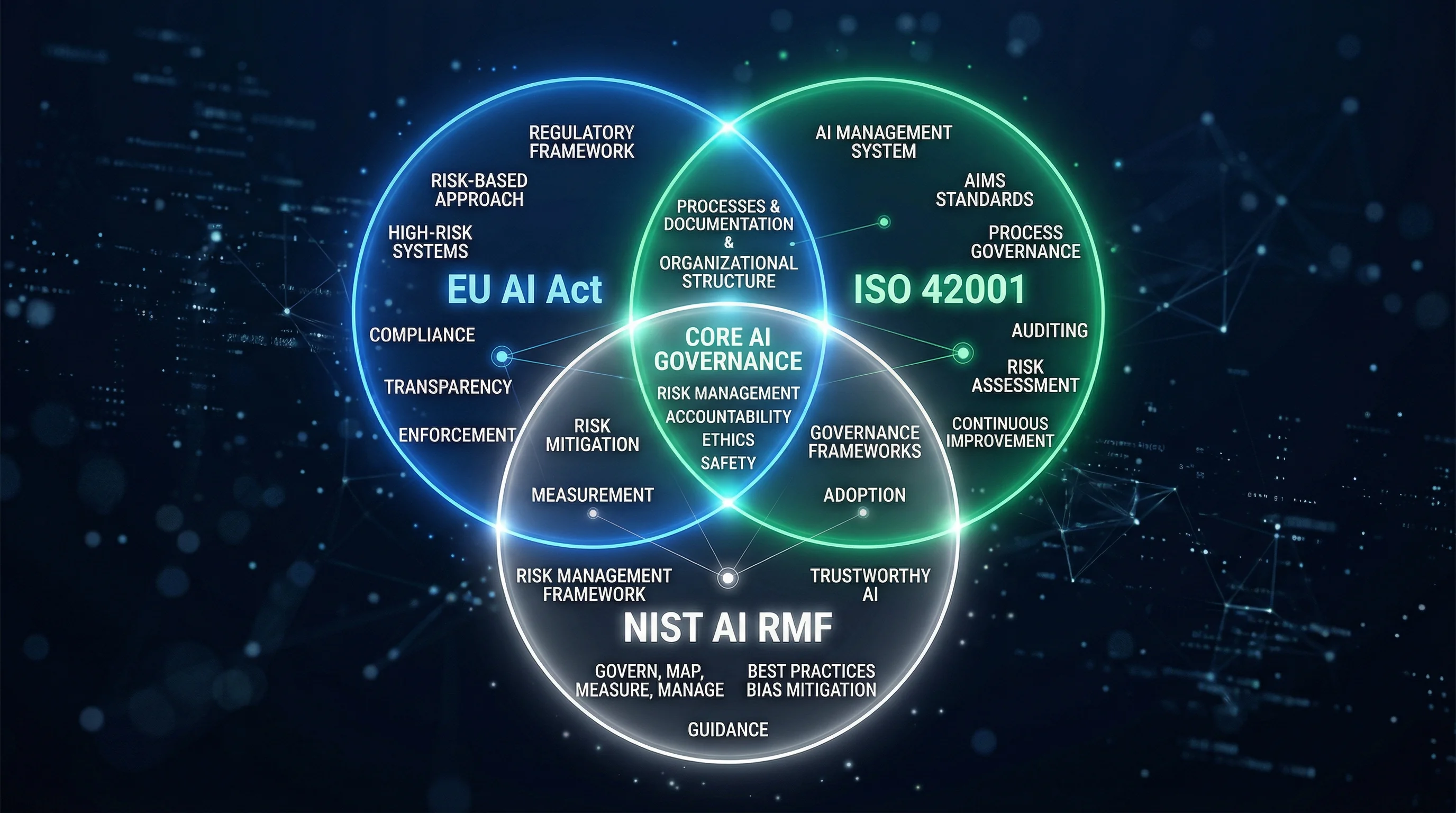
Use this when your controls already reference ISO/IEC 42001 or NIST AI RMF and you need to map them to EU AI Act evidence.

Read this if you are considering supervised testing, public-sector pilots, or innovation routes before wider use.
Evidence and transparency
Once a system is in scope, ask what you can show. Use these guides when an article points to an inventory, vendor, Article 50, AI agent, or audit gap.

Start here if your system interacts with people, generates synthetic content, supports biometric categorisation, or creates public-facing AI text.

Use this after the law-versus-code article to separate Article 50 duties from voluntary implementation support.
Regulatory monitoring
Digital Omnibus updates, enforcement signals, weekly notes, and public incidents belong in a monitoring track. Keep that track separate from current-law controls until the law changes.

Track provisional-agreement changes without treating them as adopted law. Useful for management updates and change registers.

Use this to monitor national authority designations, enacted powers, and readiness signals without mixing them into one confidence level.

Read this for a short update on Council movement, ECB credit scoring commentary, and healthcare AI consultation activity.

Read this for earlier monitoring across confirmed changes, proposals, soft law, and founder actions.

Use this as incident context for deepfake risk, public pressure, and why transparency records matter.
Start with current law. Then read classification, evidence, transparency, and monitoring articles. The blog is grouped by task, not publication date, so you can move from legal baseline to practical records.
If you are starting from zero, read Article 5 prohibited practices, then Article 4 AI literacy, then the timeline article. If you already use AI systems, go to the Annex III checklist and audit questions hub.
No. Digital Omnibus and other proposal-stage pages are grouped separately from current-law guidance. Use them for monitoring and planning assumptions, not as a replacement for adopted law.
Articles explain a legal or governance issue. Evidence guides turn that issue into records, checklists, routing questions, and review steps.
No. The blog is educational. It does not determine legal status, confirm compliance, or replace qualified legal, privacy, regulatory, or sector advice.
EU AI Compass uses no-login browser-based tools. It may use local browser storage for consent choices and selected tool progress. Google Analytics is not used in this version. Do not enter confidential, personal, or legally privileged information into public webpages.
Use the free tools when you need a role decision, classification route, deployer check, impact-review prompt, Article 50 review, or evidence starter.