Free EU AI Act Digital Omnibus planning tool
EU AI Act Omnibus Deadline Router
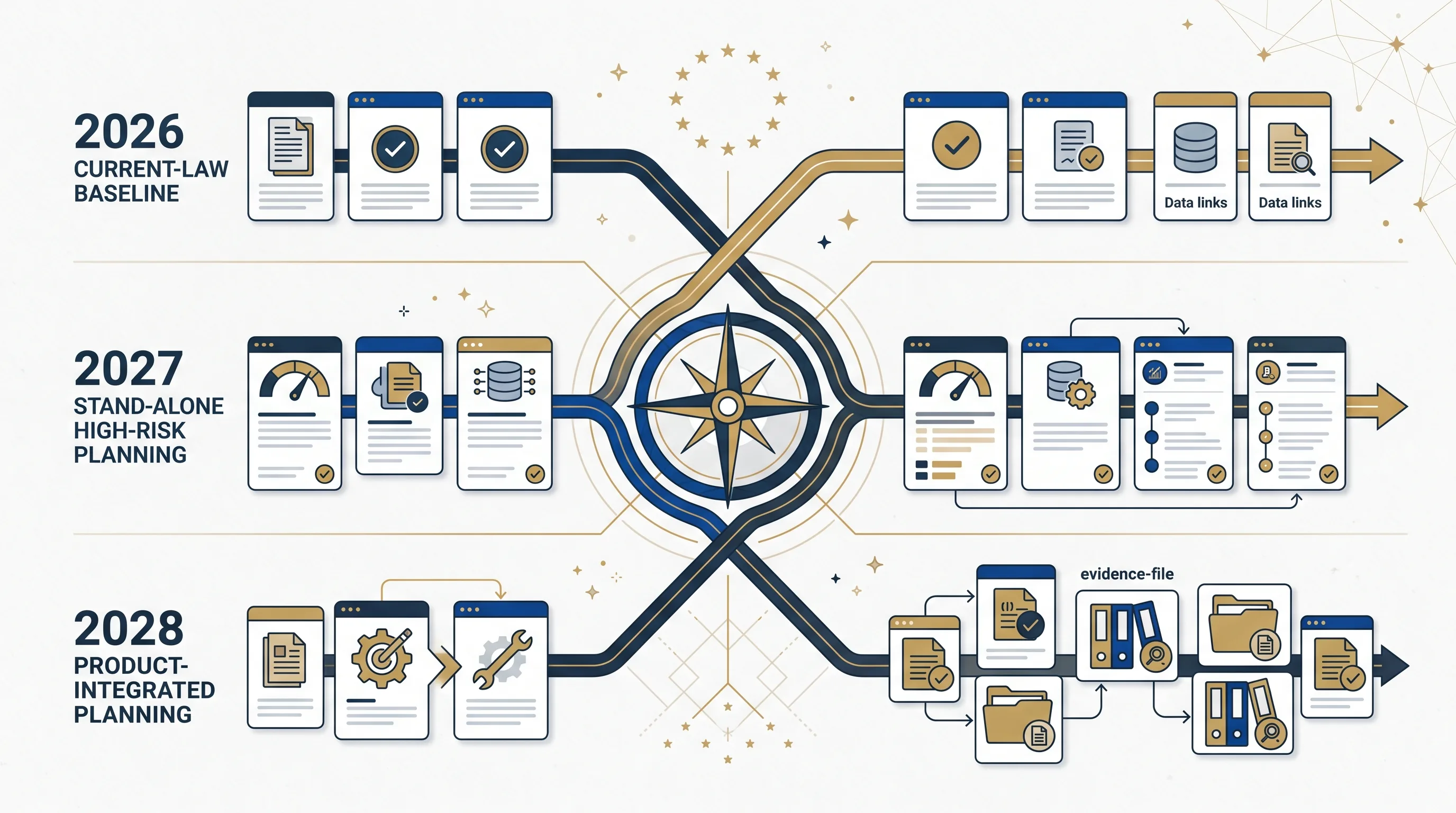
Regulation (EU) 2026/1744 did not create one simple new AI Act deadline. It established several provision-specific application routes. Use this router to identify the likely track for one AI system and the evidence work you should not pause.
Educational planning tool only. Not legal advice. Not a compliance guarantee. Regulation (EU) 2026/1744 is in force. Use the consolidated Regulation (EU) 2024/1689 current from 27 July 2026 and its provision-specific application dates.
Quick answer
Ask a better question than “Was the AI Act delayed?”
The operational question is: which obligation track applies to this AI system, and what evidence should still be built now? The router below starts from the consolidated AI Act and separates the application routes for stand-alone high-risk systems, product-integrated high-risk systems, transparency triggers, and prohibited-practice risk.
Use it for triage before board updates, vendor reviews, product release decisions, and AI inventory cleanup. Do not use it as a legal classification engine.
Router tool
Find the likely planning track
Answer for one AI system or planned AI feature. The result gives a planning track, records to keep, and the next EU AI Compass tool to open.
Decision table
The Omnibus creates tracks, not a general pause
| Question | Likely planning track to review | Work not to pause |
|---|---|---|
| Article 6(2)/Annex III high-risk AI? | 2 December 2027, under Regulation (EU) 2026/1744. | Inventory, role decision, intended purpose, risk route, oversight owner, vendor evidence. |
| AI embedded into a regulated product? | 2 August 2028, under Regulation (EU) 2026/1744. | Product-safety overlap, technical file, conformity route, sectoral-law map, change log. |
| User-facing or synthetic content system? | Article 50 and transparency solution review. Do not assume this moved with high-risk dates. | Notice trigger review, content marking decision, user-facing wording, evidence record. |
| Nudification, CSAM, or intimate-content risk? | Prohibited-practice watch item. Treat as urgent governance risk, not a later-deadline issue. | Block/disable review, vendor questions, misuse controls, escalation path, source note. |
Evidence actions
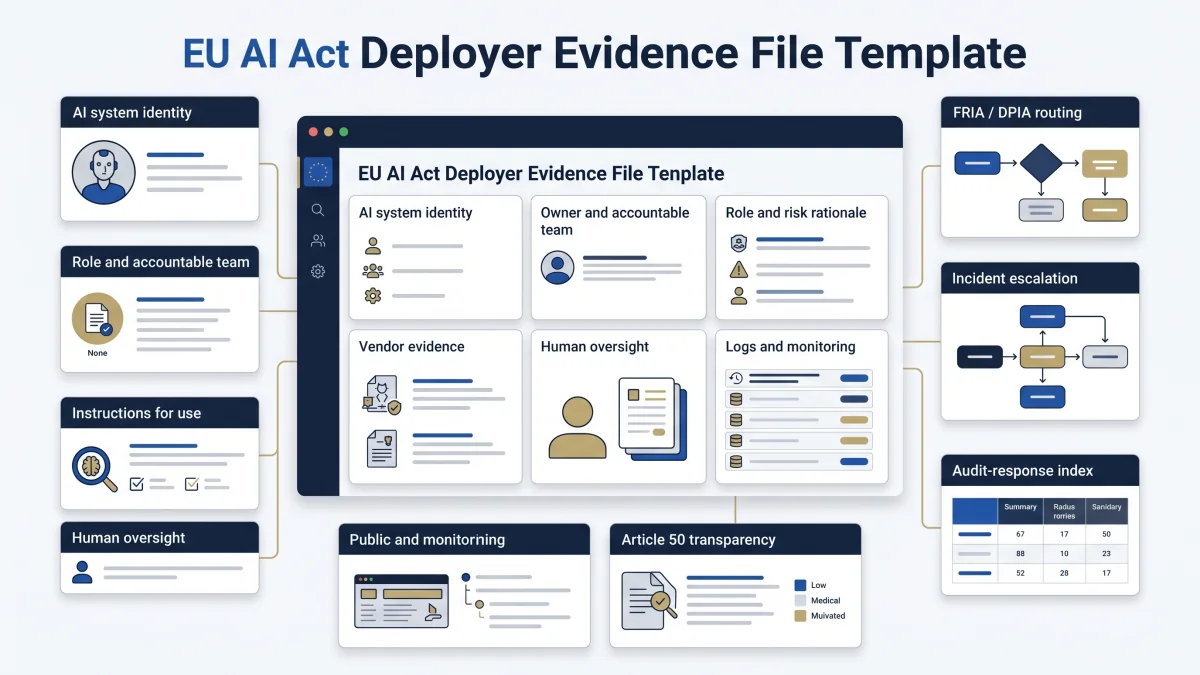
What to document while a later statutory date is pending application
System name, owner, purpose, vendor, data category, user group, and change status.
Provider, deployer, product manufacturer, importer, distributor, or unclear owner path.
Annex III, Article 50, prohibited-practice, product integration, and vendor trigger notes.
Date reviewed, source used, consolidated-law provision, applicable date, and decision owner.
Digital Omnibus cluster
Use the cluster in the right order.
Start with the router, then open the guide that matches the planning track: standards readiness, product-integrated AI, or SME and small-mid-cap relief.
Omnibus Deadline Router
Map already-applicable duties separately from the 2026, 2027, and 2028 statutory application dates for one AI system.
GUIDE · 5 MINStandards Readiness After the Omnibus
Build evidence structures that can absorb harmonised standards and common specifications when they arrive.
GUIDE · 5 MINProduct-Integrated AI Systems and 2028
Connect AI Act planning with the product safety file, supplier evidence, and sectoral-law overlap.
GUIDE · 5 MINSmall Mid-Cap Relief After the Omnibus
Treat SME and small-mid-cap relief as a planning issue, not an exemption from records.
Frequently asked questions
Use these answers to separate existing AI Act obligations, current Digital Omnibus application dates, and evidence actions before relying on a deadline assumption.