A branding, substantial-modification or intended-purpose change can shift an organisation from deployer to provider responsibilities under Article 25.
Under the EU AI Act, Deployers (companies using AI) have relatively light obligations. These include providing human oversight, keeping local logs, and maintaining data governance.
Providers may need to meet risk-management, data-governance, technical-documentation, quality-management, conformity-assessment, registration and post-market obligations depending on the system and route.
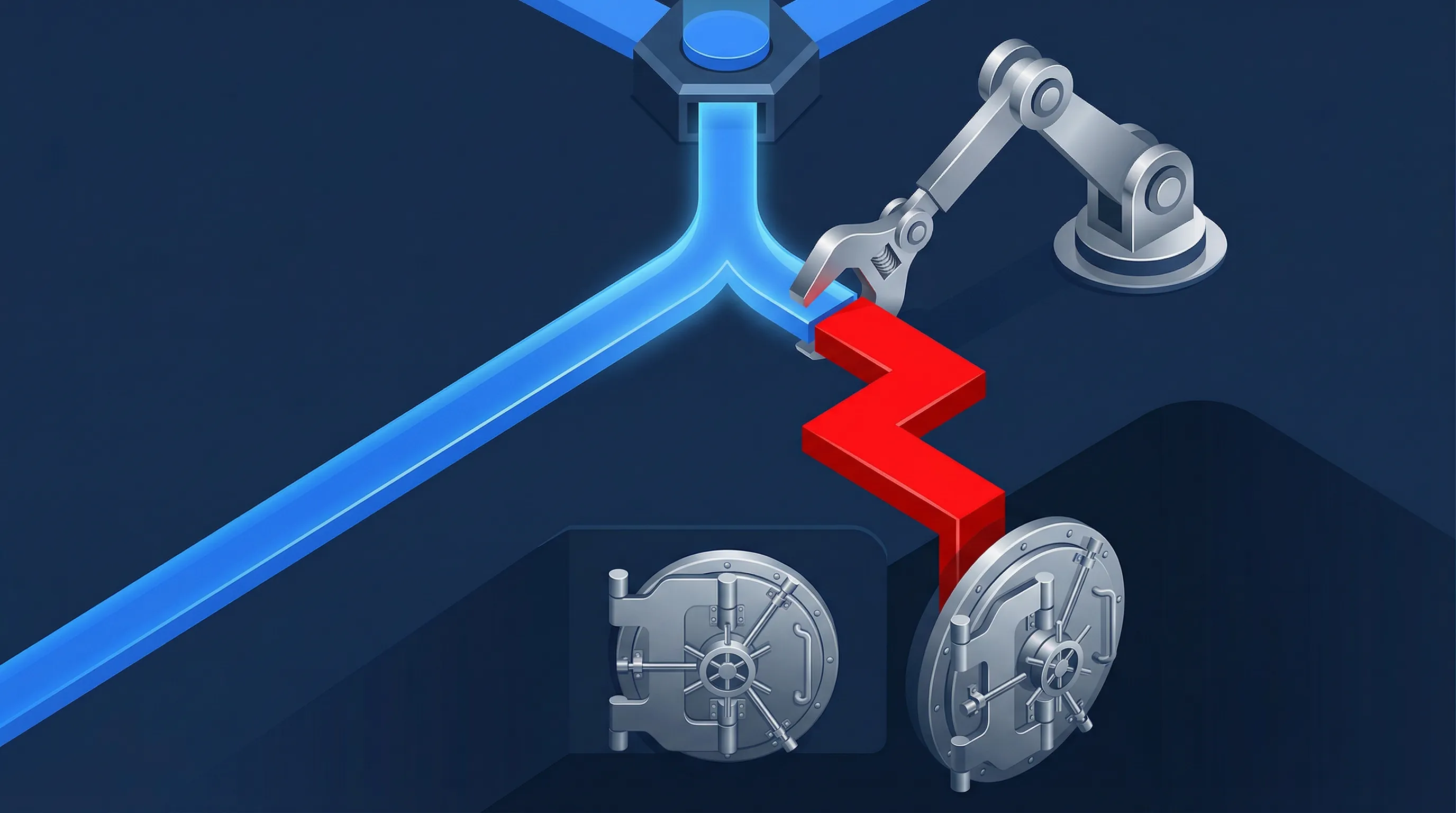
Article 25 sets out circumstances in which a distributor, importer, deployer or other third party can become the provider of a high-risk AI system, including putting its name or trademark on the system, making a substantial modification, or changing the intended purpose so the system becomes high-risk.
The same risk applies if you simply slap your corporate logo on a white-labeled product. You instantly inherit the manufacturer's liability.
The Operational Analogy
Think of AI like a commercial van. If you buy a van to deliver packages, you are the Deployer. You must obey speed limits and provide human oversight.
But if you take that van into your garage, rip out the seats, and weld in a chassis to turn it into a school bus, you have made a substantial modification.
The law says you are now a Manufacturer. You must pass crash tests before it hits the road.

Audit Your AI Modifications
Use the logic tree below to assess if your internal projects have crossed the legal threshold into Provider territory.
Privacy By Design: This runs entirely in your browser on your device. We don't track your answers, and nothing gets sent back to us.
1. The Trademark Trigger
Are you placing your company's name or trademark on a high-risk AI system that is already on the market? (e.g., buying a white-label HR screening AI and branding it entirely as your own proprietary tool).
2. The Substantial Modification Trigger (Fine-Tuning)
Have your engineers made a "substantial modification" to a third-party high-risk AI system?
This explicitly includes fine-tuning an open-source model on your proprietary corporate data, or adjusting the algorithmic weighting criteria of an existing screening tool.
Security Note: What you click stays on your machine. We don't transmit, sync, or store a single byte of this assessment.
3. The Intended Purpose Trigger
Are you using a general AI system for a high-risk Annex III purpose it was not explicitly built for? (e.g., taking an open-source chatbot API and hard-coding it into a tool that automatically rejects loan applications or job candidates).
Data Sovereignty Lock: Your selections and responses stay right here on your screen. We never see them.
Data Security Note: Your responses stay right here on your screen. We don't transmit, sync, or store your response.
Legal Posture Report
Privacy Note: Once you close your browser, all of your responses will be lost. We do not store or sync your responses on our servers.
Disclaimer: This logic tree provides structural mapping based on EU AI Act Articles 25 and 26. It does not constitute legal advice. The definition of "substantial modification" requires stringent architectural review. Consult licensed EU regulatory counsel.