EU AI Act Applicability Checker
Screen one system or a whole portfolio. Map likely EU nexus, role, prohibited or high-risk triggers, transparency obligations, and next actions — without sending answers to a server.
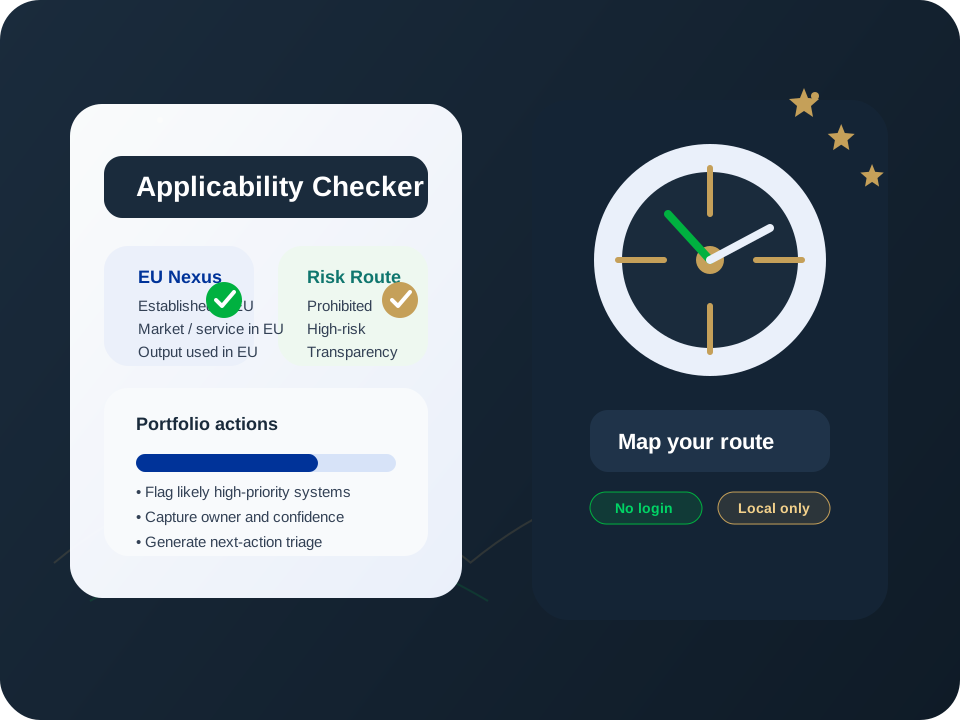
More operational than a basic questionnaire
This page is structured for internal triage, not just interpretation. It helps you screen multiple AI systems consistently, assign owners, record confidence, and convert the result into a prioritized next-action list.
- Likely applicability based on EU nexus.
- Likely role: provider, deployer, importer, distributor, manufacturer.
- Likely regulatory path: prohibited, high-risk, transparency, minimal, or unclear.
- Deadline estimate, open-item count, and next action.
- Current application-date notes for Annex III, Annex I, and Article 50 routes.
- It does not replace legal review.
- It does not perform conformity assessment.
- It does not guarantee compliance.
- It does not transmit checker answers unless you manually export them.
Checker workspace
Choose portfolio screening or single-system assessment. All saved items stay in browser local storage on this device.
Portfolio register
Add one AI system or use case at a time. The logic mirrors the free workbook's portfolio screen: EU nexus, prohibited indicators, Annex III triggers, transparency, confidence, and next action. JSON and CSV exports retain recorded social-scoring answers and their evidence status. Metadata edits keep those answers; changed screening fields require rescreening through Single-system triage. Aggregate-only and legacy records do not imply a completed detailed screen.
What the portfolio mode does well
- 1Creates an internal baseline register you can reuse and expand.
- 2Flags which systems need deeper assessment first.
- 3Surfaces low-confidence answers before they become audit surprises.
Saved portfolio items
This table is local to the current browser and device.
| System | Applicability | EU category | Priority | Open items | Milestone | Next action | Actions |
|---|
Frequently Asked Questions
This free checker helps an SME determine whether a specific AI system or portfolio is likely in scope of the EU AI Act, what role the organisation may be playing, what risk path is most likely, and what next action should happen now. It is designed for fast triage, not formal legal determination.
What does the checker do?
It screens EU nexus, role, prohibited-practice indicators, Annex I and Annex III triggers, transparency obligations, and likely next steps for one system or a portfolio.
Does it store my answers?
By default, answers stay in local browser storage on the device you are using. Nothing is sent to a server unless you manually export the results and share them yourself.
Is this an official EU checker or legal advice?
No. This is an operational triage tool created for educational and implementation-planning purposes. It is not an official EU service, legal opinion, conformity assessment, or certification.
How does the page behave on a phone?
The hero section stacks vertically, the navigation collapses into a mobile menu, form sections become single-column, and the saved-items table scrolls horizontally inside its own container instead of breaking the layout.
When should I move from this free checker to a deeper assessment?
Move to a deeper assessment when the result suggests prohibited use, likely high-risk classification, transparency obligations, GPAI dependence, or when confidence is low and the facts remain incomplete.
Source basis
Source basis: Regulation (EU) 2024/1689; Regulation (EU) 2026/1744 and the consolidated AI Act; European Commission AI Act resources and Service Desk timeline; and the Council final-green-light release dated 29 June 2026 as adoption history only.
Article 5(1)(c) scope reviewed: 5 October 2026. This correction covers social scoring by public and private actors and both detrimental-treatment alternatives. Rescreen previously saved social-scoring records against both treatment alternatives. Source: the statutory text reproduced by the European Commission AI Act Service Desk, Article 5(1)(c). Its explanatory summary is non-binding. Other provisions retain their existing source-review dates; this is not a whole-page legal revalidation.
Use note: This page is educational only and is not legal advice, a conformity assessment, or a compliance guarantee.